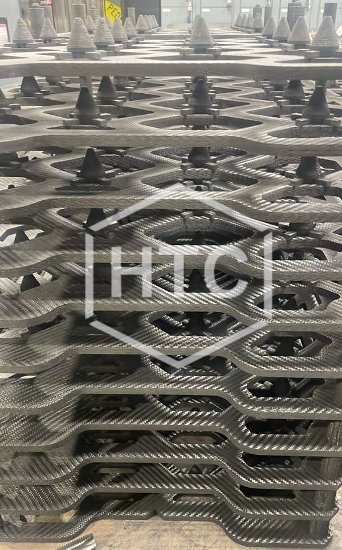
Heat treatment processes require fixtures that can withstand demanding temperatures while providing stable and reliable support for components. CFC heat treatment fixtures are becoming increasingly used in high-temperature applications because carbon fibre reinforced carbon can offer a useful combination of low weight, high-temperature capability, and dimensional stability. These fixtures can help manufacturers organise components inside furnaces and support consistent processing across repeated heat treatment cycles.
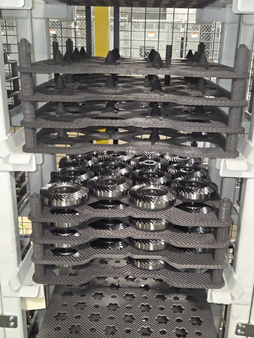
How Can CFC Heat Treatment Fixtures Improve Furnace Processing?
1. Supporting High-Temperature Applications – Heat treatment atmospheres subject fixtures to very high temperatures and multiple thermal cycles. CFC materials are engineered to withstand extreme thermal environments and maintain useful structural properties in situations where traditional fixture materials may become the weakest link. This makes CFC fixtures an option for specialized furnace applications requiring high temperature capability.
2. Offering a Lightweight Fixture Solution – A significant benefit of CFC is its relatively low density when compared to many conventional high temperature materials. Lightweight Fixtures: Lightweight furnace fixtures can make loading and unloading the furnace easier while also reducing the total weight being heated during a cycle. This may be particularly useful in applications where mass is a critical parameter for a fixture.
3. Improving Component Positioning – Correct orientation is important during heat treatment. CFC heat treat fixtures may be customized with various support rods, frames, trays, grids and the like to stack or nest multiple components in the rack to achieve the best configuration. Maintaining uniform spacing and alignment can help promote uniform processing and minimize the risk of undesired part-to-part contact.
4. Providing Dimensional Stability – Thermal cycling can put a lot of strain on furnace fixtures. CFC has properties that can make it the material of choice for dimensional stability and thermal cycling applications. A well-designed fixture may also allow a component to retain its designed shape over multiple furnace cycles.
5. Supporting Custom Furnace Requirements – The design of the fixtures will differ depending on the type of heat treatment process used. The type of fixture needed can be affected by component size and geometry as well as furnace size, temperature, loading technique, and process cycle. CFC fixtures may be produced in many forms enabling design to be tailored to specific production needs instead of being constrained by “off the shelf” solutions.
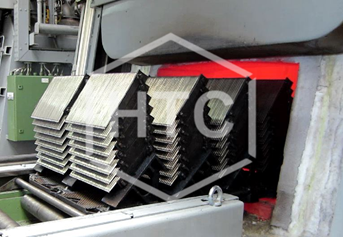
CFC heat treatment fixtures designed by cfc-fixtures.com provide a lightweight and high-temperature solution for supporting components during demanding thermal processing. Their combination of thermal performance, dimensional stability, and flexible design options makes them suitable for many specialised furnace applications. Whether the requirement involves CFC racks, grids, baskets, frames, or custom fixtures, selecting the appropriate configuration can contribute to efficient loading, reliable component support, and consistent heat treatment operations.CFC heat treatment fixtures can be used in a variety of high-temperature industrial applications, including vacuum furnace processing and specialised thermal treatment operations. They may be manufactured as racks, baskets, grids, frames, trays, or other support structures depending on the components being processed.